


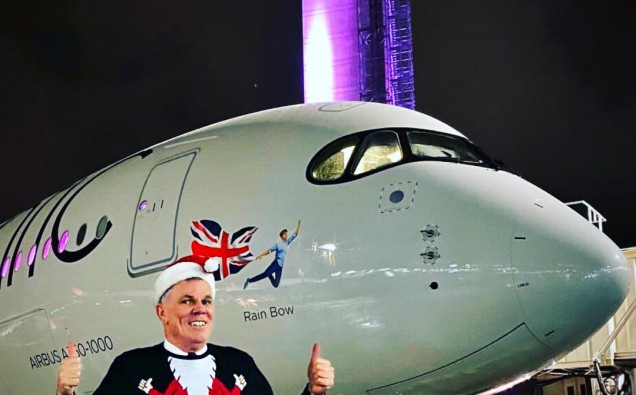
Captain Chris Pohl is a long-haul airline captain and training captain with over four decades of experience in commercial aviation. Over his career, he has trained and mentored hundreds of pilots while flying a variety of Airbus aircraft across six continents. In addition to flying, he is a fervent supporter of aviation education and engagement. He uses daily storytelling on social media, especially on Facebook and Instagram at @captainchris, to share behind-the-scenes insights from the flight deck and the realities of airline life in an effort to inspire the next generation of aviators and deepen public understanding of aviation.
Q.) You’re an accomplished pilot. What motivated you to work in the aviation sector?
Captain Chris: My inspiration started when I was twelve years old and allowed inside the cockpit of a Trans Australian Airways Boeing 727 whilst on a family vacation flight from Melbourne to Coolangatta. Something just snapped as I stood there among rows of analogue dials, switches, and instruments, listening to the aircraft’s steady hum and observing the three-person flight crew’s composed, confident professionalism. At that point, flying ceased to be a mystery and turned into a vocation. That brief encounter sparked a dream that took me from working paper rounds and grocery store jobs to paying for my flying lessons and leading long-haul aircraft over six continents for more than four decades. The special combination of accuracy, accountability, teamwork, and privilege that comes with flying, coupled with the chance to constantly learn, instruct, and inspire others along the way, is what inspired me then and continues to inspire me now.
Q.) Are flights impacted by the holiday season? If so, in what way?
Captain Chris: Indeed, the holiday season has an increasing effect on flights every year. Traditional holiday seasons now overlap across cultures and countries, resulting in persistent peaks in demand rather than a single “busy season,” as the world’s population grows more diversified and individuals travel more frequently for job, study, and family obligations. In the Northern Hemisphere, this demand often coincides with some of the most challenging operating conditions of the year. Snow, ice, blizzards, freezing fog, and strong winds are examples of winter weather that can interfere with airport operations, limit runway capacity, and cause network-wide delays.
Everyone wants to go somewhere else right now in the fast-paced world of today. Even though airlines and crews make considerable plans to keep operations running as smoothly and safely as possible, the mix of high passenger numbers, tightly planned aircraft rotations, and unexpected weather makes delays and cancellations more likely during the holiday season.
Q.) What should passengers keep in mind while they travel during the holiday season?
Captain Chris: Traveling around the holidays can be hectic and stressful, but keep in mind that everyone else is also attempting to reach their destination. Safety is always the top priority, and airline pilots and ground personnel will stop at nothing to ensure your safe arrival. Although delays are unavoidable, they are never ignored. When several individuals are assisting you, a little tolerance and compassion go a long way. They’re spending the holidays away from their own families so you can spend time with yours.
Q.) What are your family’s holiday customs around this time of year?
Captain Chris: I’ve discovered over the last thirty years that it’s not always possible for long-haul pilots to take Christmas off. I learned to deal with that fact instead of fighting it, sometimes by strategically placing bids for vacations that would allow me to travel with my family. Because of this, Christmas hasn’t always been traditional for us, but it has been immensely memorable. We’ve traveled to destinations like New York, San Francisco, Los Angeles, and Cape Town during the holiday season. Making the most of our time together and transforming time spent away from home into something special is a custom that applies wherever we are.
Q.) When you work as a pilot, how do you spend Christmas and New Year’s?
Captain Chris: Making the best of the situation rather than fighting it is a continuation of what I’ve already discussed when I work during Christmas or New Year’s. We tend to take care of each other when crews are away from home and separated from family on big events. On those excursions, there is a genuine sense of companionship. We try to celebrate as a group, eat together, joke, and craft our own version of the event. Even though it’s not where we had intended to be, it’s still a nice place to be, and those times spent together frequently turn into some of the most memorable aspects of the work.
Q.) Tell us about any childhood traveling memories you had during the Christmas or New Year’s celebrations.
Captain Chris: My own childhood Christmas memories were quite different from those of my children, who have had the good fortune to become some of the most well-traveled individuals I know. Rather than adopting winter customs, we would frequently spend the holidays in a caravan on Lake Eildon, northeast of Melbourne, swimming, water skiing, and avoiding the heat.
My respect for how travel, in whatever form, makes lifelong memories was influenced by those uncomplicated summers filled with sun, water, and family time.
Q.) What should one remember in order to become a proficient pilot?
Captain Chris: The most crucial element in becoming a skilled pilot is RESPECT—RESPECT for the aircraft, the weather, and the regulations that are in place to ensure aviation safety. Because of decades of collected knowledge, demanding training, hard-earned experience, developing technology, and strict regulation, flying is as safe as it is today.
It takes years, often decades, to achieve true airmanship, and it necessitates humility and ongoing education. Aviation serves as a constant reminder that learning never ends and that a pilot should quit flying the moment they think they know everything.
Q.) Do you have any advice for aspiring pilots?
Captain Chris: I advise aspiring pilots to realize that while many people have the chance to fly, success requires tenacity, perseverance, and a sincere knack for learning. As you advance in your career, you will face challenging exams, frequent flight tests, and ongoing evaluation.
In aviation, learning and retesting never truly end, and it can occasionally feel overwhelming. When that occurs, concentrate on the next action, the next lesson, and the next check rather than looking too far ahead. Consistency and perseverance are rewarded in aviation, and if you keep going one step at a time, you will succeed.
“The sky has a way of rewarding those who take care of the fundamentals, maintain humility, and never stop learning.”
By: Rida Khan (Aviation Author): Season’s Greetings from our newspaper family to yours.
Wishing all the readers of Asian World Newspaper
Merry Christmas and a Prosperous New Year 2026.
Instagram A/c: aviationauthor.ridakhan